Get the app
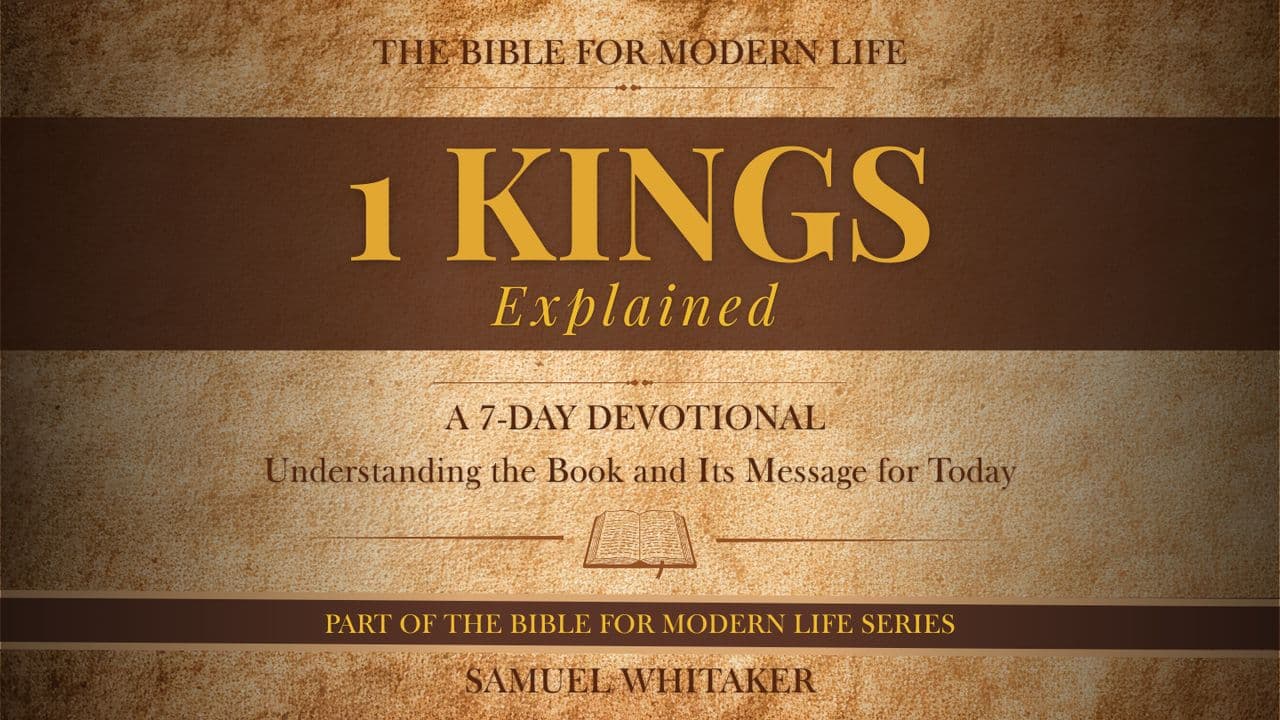
1 KINGS EXPLAINEDSample
The Story God Keeps Moving Forward
First Kings ends without resolution. The kingdom is divided, the northern tribes locked into institutional apostasy, the story of Elijah still in motion, the account of Ahab's dynasty not yet concluded. The reader is left in the middle of something — the covenant still standing, the consequences still accumulating, the prophets still speaking, the outcome still unresolved.
This lack of resolution is not a narrative failure. It is one of the most theologically honest features of the book. The covenant community consistently finds itself exactly here: in the middle of something, between the promise that has been made and the fulfillment that has not yet arrived, navigating the long middle ground where faithfulness is required but outcomes are not guaranteed.
What makes this bearable — and more than bearable — is the thread of divine faithfulness that runs through every reversal in the book. Even in the judgment on Solomon's unfaithfulness, God limits the judgment for David's sake: not during your lifetime, and I will leave one tribe for the sake of my servant David. The judgment is real and consequential. And within it, the covenant promises to David are still operative, still shaping what God will and will not do. The faithful God is constraining even his own judgment by his prior covenant commitment.
Elijah under the broom tree receives bread and rest, not a strategic plan. The still small voice at Horeb gives him not victory but a commission — anoint your successor, anoint the instruments of God's purposes across multiple generations, and go back. The work continues beyond any one prophet's capacity to complete it. It is larger than Elijah can see, sustained by a God whose purposes extend beyond any generation's contribution.
For communities navigating periods of institutional decline, cultural pressure, and the sense that faithfulness is losing ground — this is the word 1 Kings leaves with its reader. The story is not over. The seven thousand are real. The God who kept his purposes moving through Solomon's failure and Ahab's apostasy and Elijah's collapse is the same God who is sustaining the work now, in ways that may not yet be visible, toward a fulfillment that no generation's failure can finally prevent.
We adapted this plan from 1 Kings Explained, part of the Bible for Modern Life Series. Want more content like this? Explore other books in the series at samuelwhitaker.net.
REFLECTION QUESTIONS
1. God limits the judgment on Solomon 'for the sake of my servant David' — the prior covenant commitment constraining even divine judgment. What does it mean to live within a story shaped by promises God has made that are more durable than any generation's faithfulness or failure?
2. Elijah's commission after Horeb is to anoint his successor and the next instruments of God's work — a handoff that extends the consequences of his ministry across generations he will not live to see. What would it mean for you to invest in the formation of the next generation of faithful witness as your primary act of faithfulness right now?
TODAY'S PRACTICE
Read 1 Kings 11:13 today — God's word constraining the judgment on Solomon: 'Nevertheless, I will not tear the whole kingdom from him, but will give him one tribe for the sake of David my servant.' In the middle of a deserved judgment, the prior covenant commitment shapes what God will and will not do. Bring your own situation — your community, your concerns, your sense of what is failing — before this God, and ask him to show you where his prior commitments are shaping what is happening in ways you cannot yet see.
We adapted this plan from 1 Kings Explained, part of the Bible for Modern Life Series. Want more content like this? Explore other books in the series at samuelwhitaker.net.
Scripture
About this Plan
How long will you waver between two opinions? Elijah's challenge on Mount Carmel cuts across three thousand years with the same directness. First Kings traces what divided loyalty produces across the reigns of Israel's most gifted and most compromised kings — from Solomon's wisdom to his apostasy, from Elijah's fire on Carmel to his collapse under a broom tree. Over seven days, this plan explores what institutions cannot sustain, what wisdom alone cannot protect, and why the story keeps moving despite every human failure to keep it on course.
More
We would like to thank Samuel Whitaker for providing this plan. For more information, please visit: https://samuelwhitaker.net