Get the app
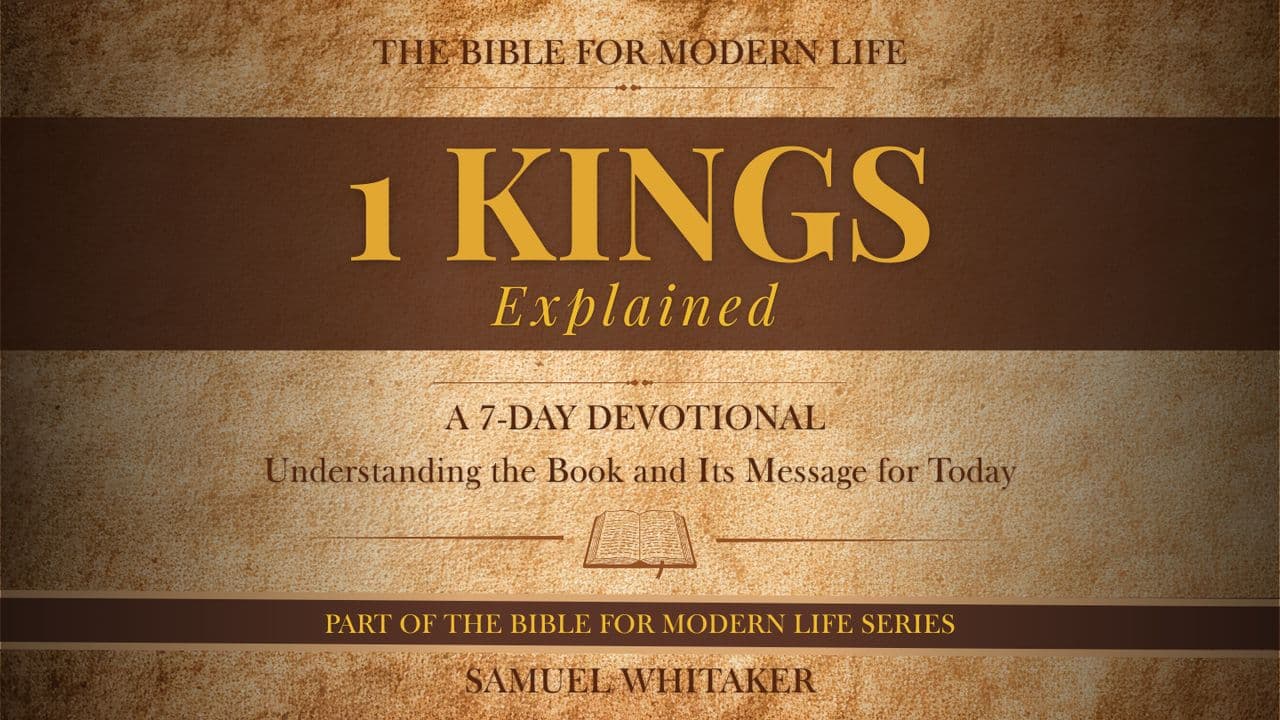
1 KINGS EXPLAINEDSample
The Arc from Carmel to the Still Small Voice
First Kings moves through three distinct acts, each pressing the same question from a different angle.
The first act belongs to Solomon. His reign opens with extraordinary promise — a young king asking not for wealth or power but for wisdom to serve, and receiving everything he did not ask for as well. The building of the Temple is one of the most magnificent achievements in the narrative: elaborate, detailed, theologically saturated. Solomon's dedication prayer is among the most sophisticated texts in the entire Old Testament. And then, slowly, the drift begins. Foreign wives. Political alliances. Shrines on the hill east of Jerusalem. The Temple and the apostasy appearing side by side, not as irony but as the genuine complexity of a man who is simultaneously building something for God and dismantling his own capacity to sustain it.
The second act covers the division. Solomon's son Rehoboam takes the elders' counsel, rejects it, and listens instead to young advisors who tell him to increase the burden. The kingdom tears. Jeroboam — the man Solomon himself elevated — becomes the first king of the north and immediately builds golden calves at Bethel and Dan, not as a rejection of Yahwism but as a political arrangement to prevent his subjects from traveling to Jerusalem. He uses religion to serve the institution. It becomes the sin that defines every subsequent northern king.
The third act belongs to Elijah. He appears without introduction in chapter 17 — suddenly present, challenging the royal establishment that has brought Baal worship to its zenith under Ahab and Jezebel. The fire falls on Carmel. The false prophets are defeated. And then Elijah is under a broom tree in the desert, asking to die, certain that he alone is left. The God who met him in fire meets him instead in bread and rest, in a still small voice, in the correction that seven thousand have not bowed — and in a commission to go back and anoint his successor.
The arc from Carmel to Horeb is not just biography. It is a spiritual map.
REFLECTION QUESTIONS
1. Solomon's fall is not one decision but the accumulated direction of a thousand individually defensible choices. Looking at your own life over the past five years, what does the cumulative direction of your small decisions reveal about where you are actually heading?
2. Elijah under the broom tree believes he is the only faithful person left — and he is wrong. Where in your own life or community have you assumed faithfulness was failing because it was not visibly prevailing? Who might be among the 'seven thousand' you are not seeing?
TODAY'S PRACTICE
Read 1 Kings 19:12 today — the still small voice after the wind, the earthquake, and the fire. God was not in the spectacular phenomena. He was in what came after. Ask God honestly: where in your own life are you waiting for the dramatic sign when God may be speaking in something quieter that you have been moving past too quickly to hear?
Scripture
About this Plan
How long will you waver between two opinions? Elijah's challenge on Mount Carmel cuts across three thousand years with the same directness. First Kings traces what divided loyalty produces across the reigns of Israel's most gifted and most compromised kings — from Solomon's wisdom to his apostasy, from Elijah's fire on Carmel to his collapse under a broom tree. Over seven days, this plan explores what institutions cannot sustain, what wisdom alone cannot protect, and why the story keeps moving despite every human failure to keep it on course.
More
We would like to thank Samuel Whitaker for providing this plan. For more information, please visit: https://samuelwhitaker.net