Get the app
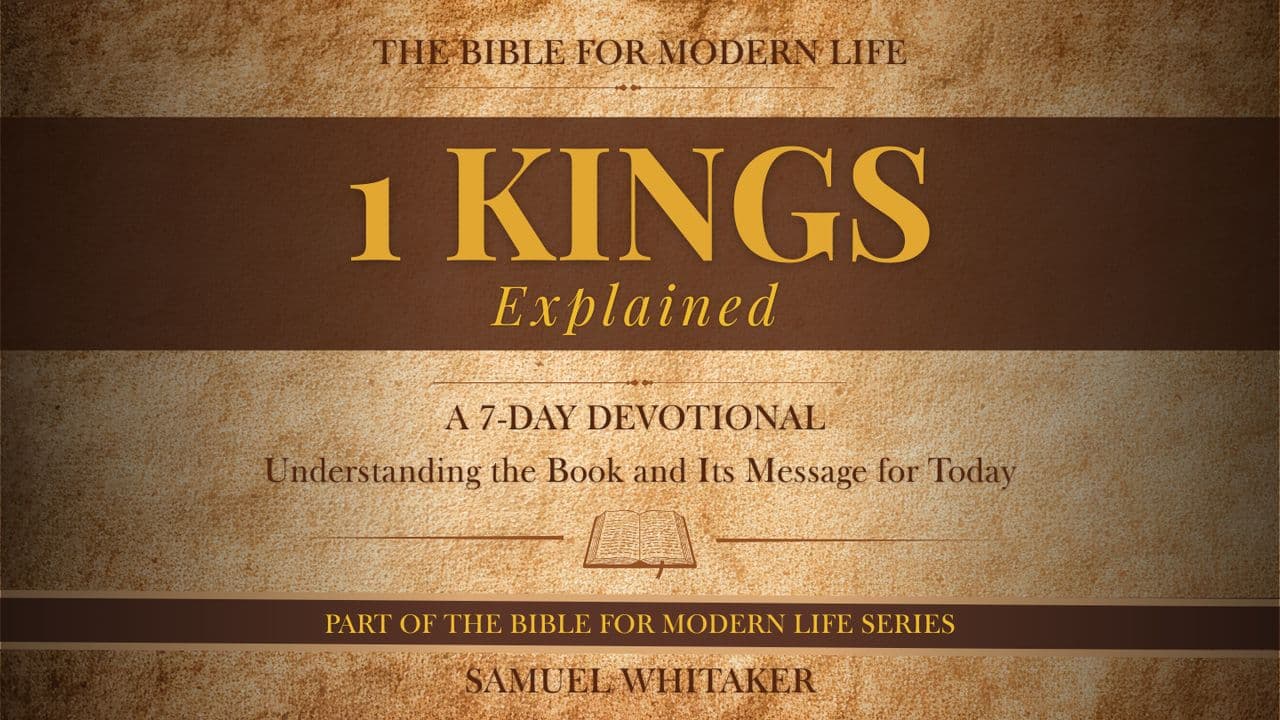
1 KINGS EXPLAINEDSample
A Book Written Between Promise and Loss
First Kings occupies a pivotal position in the narrative of Scripture. It stands between the high point of Israel's national story — the reign of David, the promise of an eternal dynasty, the covenant established in strength — and the unraveling of everything that promise seemed to guarantee. By the time the book ends, the unified kingdom has split into two hostile nations, the northern tribes have been led into systematic covenant violation, and the succession of rulers gives the reader no sustained reason for hope.
The book is part of the Deuteronomistic History — the great collection running from Deuteronomy through 2 Kings, shaped throughout by the theological conviction that blessing follows obedience and that the land itself is conditional on faithfulness. This framework is not background assumption. It is applied explicitly and repeatedly: in the evaluative formula for each king, in the prophetic announcements that interpret events theologically, and in the narrative structure that consistently shows the consequences of the choices that kings and people make.
Understanding this context is essential for reading 1 Kings well. It was likely shaped in its final form by people who knew exactly how the story ended — exiles in Babylon, trying to understand how the covenant relationship between God and Israel could survive the catastrophe that had overtaken them. They read the early reign of Solomon knowing the division was coming. They watched the Temple dedication knowing the Temple would eventually be destroyed. They read from within the ruins, and that vantage point shapes everything about what they emphasize and why.
What emerges from this perspective is not despair but covenantal realism — the honest acknowledgment that human institutions consistently fall short of their covenant purposes, paired with the equally honest conviction that the God who makes promises is more durable than any institution that carries them. The book is not primarily about what kings accomplished or failed to accomplish. It is about what God sustains through every form of human failure.
REFLECTION QUESTIONS
1. First Kings was likely shaped by people writing from inside catastrophe, looking back at how a magnificent beginning became a devastating ending. How does reading a text written from that vantage point change how you receive its warnings about accommodation and drift?
2. The Deuteronomistic framework applies a consistent standard to every king: covenant faithfulness. Not political success, not institutional growth, not personal virtue — covenant faithfulness. How does that standard compare to the one you actually apply when evaluating leaders in communities you belong to?
TODAY'S PRACTICE
Read 1 Kings 8:27 today — Solomon's prayer at the Temple dedication: 'But will God really dwell on earth? The heavens, even the highest heaven, cannot contain you. How much less this temple I have built!' This is the wisest man in history acknowledging that no institution, however magnificent, can contain or guarantee God's presence. What institutions in your own life have you been treating as guarantees of something only God can provide?
Scripture
About this Plan
How long will you waver between two opinions? Elijah's challenge on Mount Carmel cuts across three thousand years with the same directness. First Kings traces what divided loyalty produces across the reigns of Israel's most gifted and most compromised kings — from Solomon's wisdom to his apostasy, from Elijah's fire on Carmel to his collapse under a broom tree. Over seven days, this plan explores what institutions cannot sustain, what wisdom alone cannot protect, and why the story keeps moving despite every human failure to keep it on course.
More
We would like to thank Samuel Whitaker for providing this plan. For more information, please visit: https://samuelwhitaker.net