Get the app
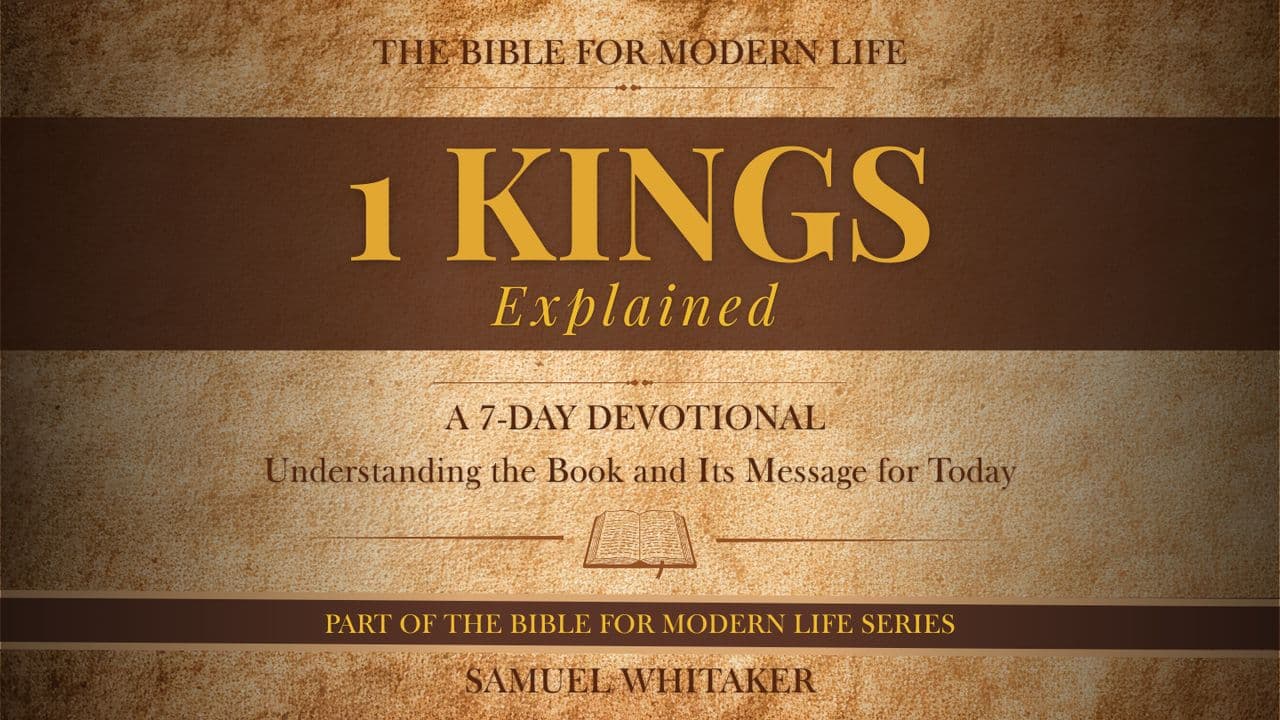
1 KINGS EXPLAINEDSample
What Institutions Cannot Bear — and What They Can
One of the most practically relevant themes 1 Kings offers is its sustained reflection on what human institutions can and cannot accomplish — and what happens when institutions designed to serve God's purposes begin instead to serve their own perpetuation.
Jeroboam's golden calves are the book's clearest illustration of this dynamic. They are not straightforwardly pagan. They are Yahwistic — the announcement that accompanies them is the same language used at the Exodus: here are your gods who brought you up out of Egypt. But they are strategically located at Bethel and Dan to prevent the northern Israelites from traveling to Jerusalem for worship and thereby transferring their loyalty back to the Davidic dynasty. Jeroboam uses the forms of authentic Yahwism in service of his own political stability. The institution he creates bends genuine religious practice to institutional need. And this becomes the sin that defines every subsequent king of the north — not because they are unusually wicked, but because the institutional pattern he established is too politically convenient to dismantle.
This pattern is recognizable in every era. Institutions created to embody higher purposes — religious, political, educational, charitable — tend, over time, to serve the interests of their own perpetuation as much as the purpose they were designed to advance. The drift from mission to maintenance is not the result of malicious intent. It is the accumulated weight of a thousand small decisions, each reasonable in itself, that gradually reorient an institution around its own survival rather than its original vocation.
And yet God does not simply abandon institutions. He works through them, judges them, and ultimately fulfills his purposes in ways that transcend what any particular institution achieves. The Temple built with forced labor by a compromised king becomes the place where Solomon's magnificent prayer is spoken and where God's presence genuinely dwells. The institution, compromised from the beginning, is neither abandoned nor idealized. It is worked through.
REFLECTION QUESTIONS
1. Jeroboam uses the forms of authentic worship to serve his political needs. Where in your experience have you seen religious institutions or practices primarily serving institutional survival rather than the covenant purposes they were designed to advance?
2. God works through the Temple even though it was built with forced labor and by a king who would later build shrines to other gods. What does this say about how God relates to compromised institutions and the possibility of genuine worship offered through imperfect structures?
TODAY'S PRACTICE
Read 1 Kings 12:28 today — Jeroboam's announcement as he presents the golden calves: 'Here are your gods, Israel, who brought you up out of Egypt.' The language is recognizable, even correct in its historical claim. But it is being used to serve a different purpose than the truth it speaks. Ask God to show you where in your own life you may be using the right language for the wrong organizing center.
Scripture
About this Plan
How long will you waver between two opinions? Elijah's challenge on Mount Carmel cuts across three thousand years with the same directness. First Kings traces what divided loyalty produces across the reigns of Israel's most gifted and most compromised kings — from Solomon's wisdom to his apostasy, from Elijah's fire on Carmel to his collapse under a broom tree. Over seven days, this plan explores what institutions cannot sustain, what wisdom alone cannot protect, and why the story keeps moving despite every human failure to keep it on course.
More
We would like to thank Samuel Whitaker for providing this plan. For more information, please visit: https://samuelwhitaker.net