Get the app
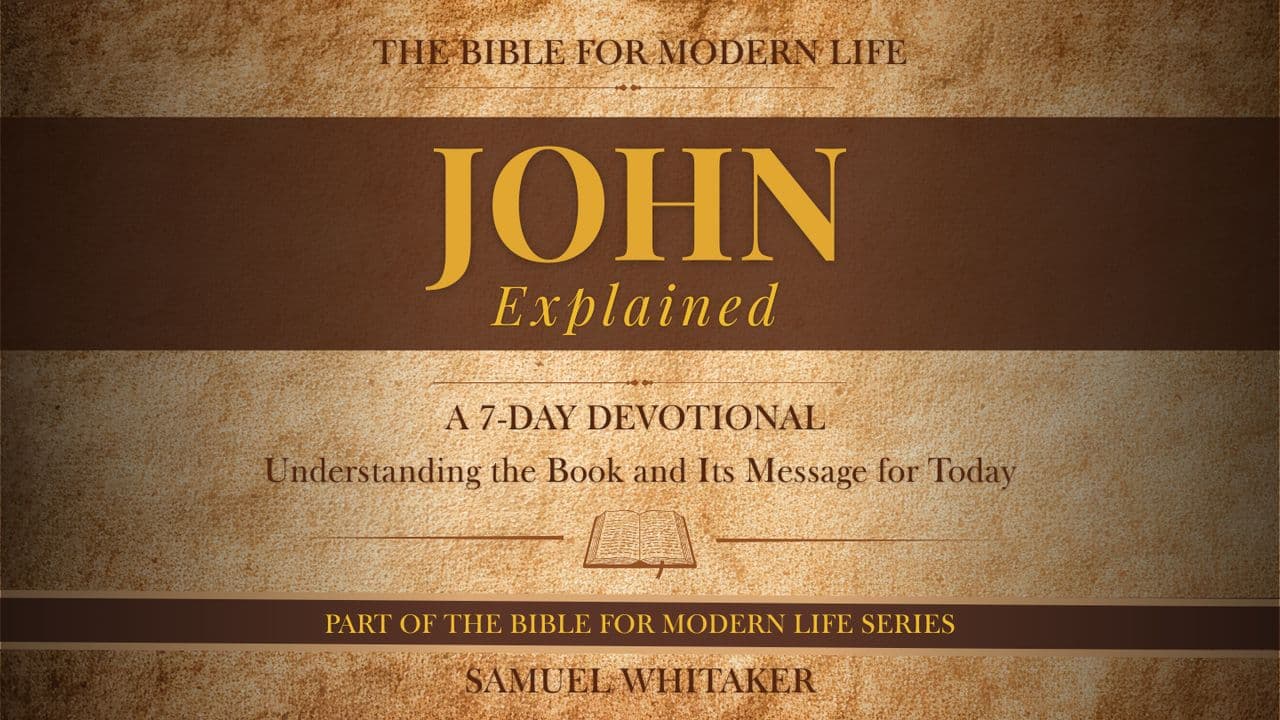
JOHN EXPLAINEDSample
Five Lessons That Hold
John’s Gospel teaches not through rapid narrative accumulation like Mark, or sustained argument like Matthew, or the patient building of a social case like Luke. It teaches through depth — through encounters that go below the surface, through seven signs each followed by discourse, through a prologue that announces everything, and a passion narrative that accomplishes it. Five lessons emerge from that sustained depth.
The Word became flesh, and nothing is the same. The incarnation is not a theological category. It is the entry of the eternal into the specific — the logos becoming tired beside a well, weeping at a grave, feeling the nails. No dimension of human experience is outside the scope of what the incarnation has entered. The formation this produces is the gradual replacement of a God who is abstractly present with a God who is concretely near — present to the specific texture of daily experience in the way that only flesh entering flesh makes possible.
Belief is the work. What must we do to do the works God requires? The work of God is this — to believe in the one he has sent. Belief is not the precondition for the work. It is the work. The primary thing the Gospel requires is not activity but orientation — the sustained, whole-person engagement of the self with the one in whom life is found. The organizational logic of communities rewards visible activity and measurable outcomes. Belief in John’s sense produces neither directly. It produces abiding, which produces fruit, which cannot be manufactured by any logic that rewards the appearance of production over the reality of relationship.
Love is the evidence. By this, everyone will know that you are my disciples if you love one another. The watching world does not have access to the signs or the discourses. It has access to the observable quality of life and relationship in the communities that carry the Gospel’s name. The love the commandment establishes is not warmth and goodwill. It is the cross — the love of one who washes feet in full knowledge of betrayal, who lays down life for friends, who prays for those who are crucifying him. Its recognizable absence is among the most consistently effective arguments against the Gospel’s claims that any skeptic has available.
The Paraclete sustains what the mission requires. The Spirit who was promised is the Spirit who attends the community’s honest engagement with the tradition, illuminating what the tradition means in new circumstances, producing in each new generation the fruit that abiding makes possible. The promise is both resource and demand: the Spirit will teach those who engage the tradition honestly, in the posture of those who expect to be taught rather than confirmed.
Glory comes through and not around the cross. The hour of the Son of Man’s glorification arrives — and the glorification is the cross. The grain of wheat must fall into the ground and die. The fruit is real, and it is the fruit of the dying rather than of a survival that avoids it. The community organized around the cross looks different from a community organized around institutional health and visible success. It moves toward cost rather than away from it, toward those whose need is greatest rather than those whose association is most advantageous.
REFLECTION QUESTIONS
1. Which of the five lessons most directly names the specific resistance in your own life right now? What would it cost you to receive it fully rather than hold it at a theological distance?
2. The watching world knows you are disciples of Jesus by your love for one another. What does the observable quality of love in your community reveal about the actual condition of your formation?
TODAY’S PRACTICE
Choose one of the five lessons and write down one specific, concrete thing it is asking of you this week — not a general intention to believe more deeply or love more fully, but a named decision about a named thing. John’s depth is not abstract. It presses toward the specific.
Scripture
About this Plan
The Gospel of John begins before the world did — In the beginning was the Word. Of the four Gospels, it is the most theologically concentrated and the most personally searching. It was written for people who were not there and who are nonetheless called to the same faith those experiences produced. Over seven days, this plan traces John’s deepest claims: the Word made flesh, the seven signs, the encounters that cut past every presented question to the real one underneath, and the question the risen Jesus keeps asking: do you believe this?
More
We would like to thank Samuel Whitaker for providing this plan. For more information, please visit: https://www.samuelwhitaker.net