Get the app
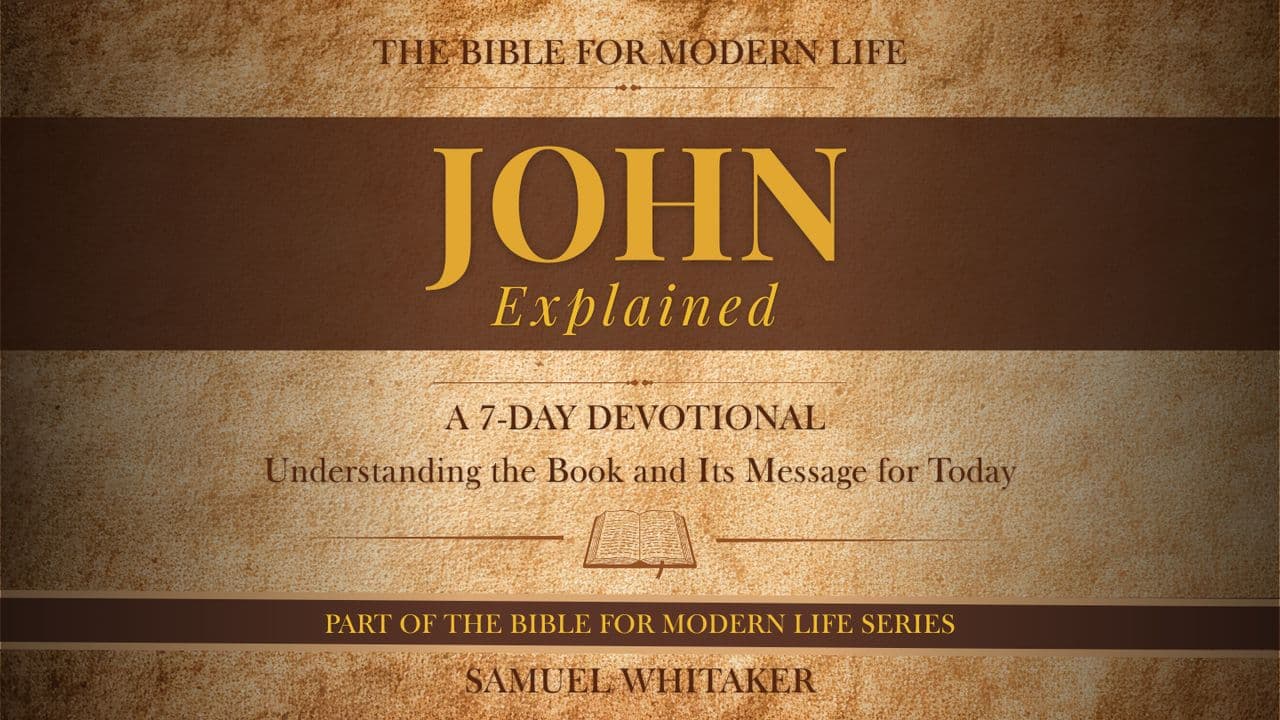
JOHN EXPLAINEDSample
In the Beginning
Every other Gospel begins somewhere in the middle of human history. Mark begins at the Jordan River. Matthew begins with a genealogy. Luke begins with a letter. John alone steps back far enough to locate the story of Jesus within the story of creation itself.
In the beginning was the Word. The Greek term is logos — a concept that carried enormous weight in both Jewish and Greek philosophical traditions. For the Greek world, the logos was the rational principle organizing the cosmos, the intelligibility that made the universe comprehensible rather than chaotic. For the Jewish tradition, the Word of God was the creative power by which everything came into being. John reaches into both simultaneously and announces that the logos — the one through whom all things were made, the light the darkness has never overcome — has become flesh and made his dwelling among us.
This is not a theological warm-up before the real story begins. It is the answer to the deepest human question about meaning and ground. The question of what is behind the surface of things, what gives everything else its coherence and significance, what the universe is made of at the level that precedes matter and energy and time — John answers it with a person. Not a principle, not a system, not a philosophical category. A person who can be known, who knows those who come to him, and who offers to those who receive him the status of children of God.
The prologue announces the identity of Jesus before he has appeared. The reader knows from verse one what no character in the Gospel fully understands until after the resurrection. That gap — between what the reader already knows and what the characters are only beginning to grasp — generates the sustained dramatic irony that runs through all twenty-one chapters.
John is not written for casual inquirers. It is written for people navigating the gap between belief and sight — people who were not there, who have not walked beside Jesus on any road, and who are nonetheless called to the same faith those experiences produced. Every reader who has ever opened this Gospel since the first century is in exactly that position. The Gospel was written for you.
REFLECTION QUESTIONS
1. What does it mean to you that the Gospel begins not with a birth or a miracle or a teaching, but with a metaphysical declaration about who Jesus is before anything exists? How does that beginning change what follows?
2. John says those who received the Word were given the right to become children of God. What does it mean to receive him — not merely to acknowledge him, but to receive him? And have you?
TODAY’S PRACTICE
Read John 1:1–18 today — the entire prologue. Read it slowly. Read it twice. Notice what John establishes before the narrative begins. Then read John 20:30–31, the Gospel’s own statement of purpose: these things are written so that you may believe. Hold the beginning and the purpose together. Everything in between is the demonstration of what both mean.
Scripture
About this Plan
The Gospel of John begins before the world did — In the beginning was the Word. Of the four Gospels, it is the most theologically concentrated and the most personally searching. It was written for people who were not there and who are nonetheless called to the same faith those experiences produced. Over seven days, this plan traces John’s deepest claims: the Word made flesh, the seven signs, the encounters that cut past every presented question to the real one underneath, and the question the risen Jesus keeps asking: do you believe this?
More
We would like to thank Samuel Whitaker for providing this plan. For more information, please visit: https://www.samuelwhitaker.net