Get the app
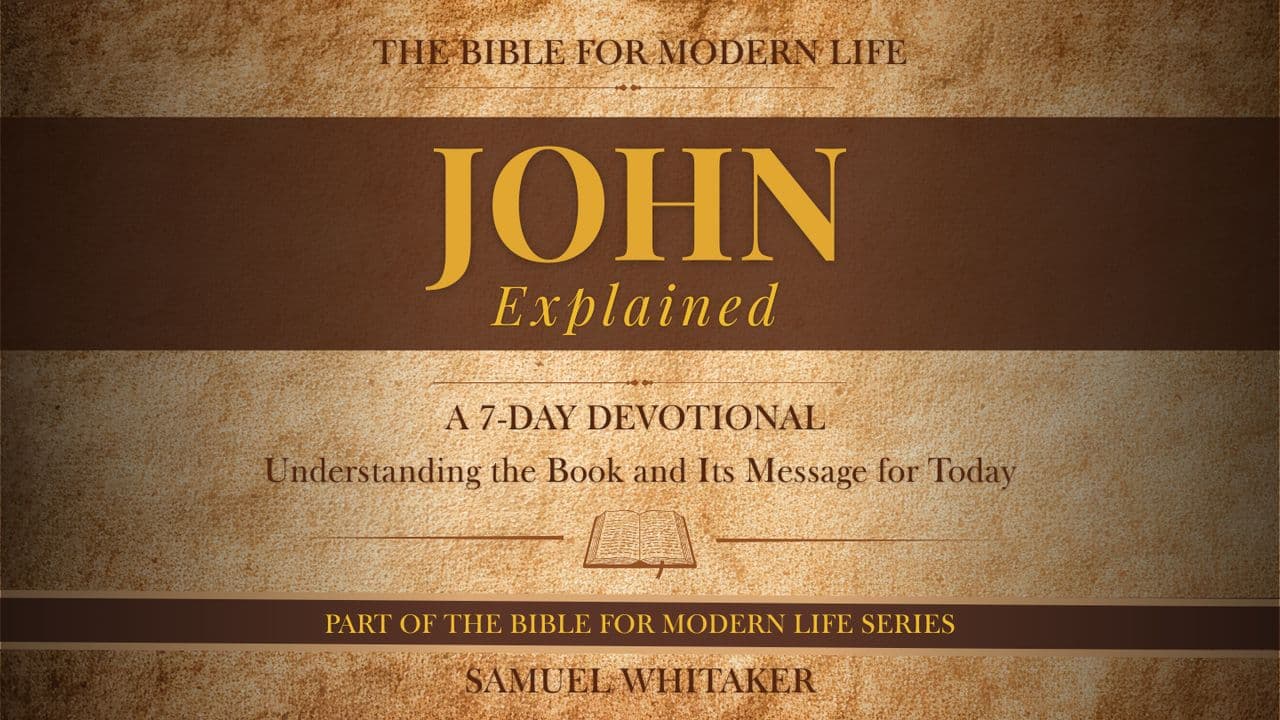
JOHN EXPLAINEDSample
The Signs and What They Ask
John does not call the miracles of Jesus miracles. He calls them signs. That distinction matters. A miracle demonstrates power. A sign points toward something beyond itself. John’s seven signs are not primarily demonstrations of what Jesus can do. They are carefully selected occasions for the most important question in the Gospel: what do you make of what you have seen, and do you believe?
The first sign happens at a wedding in Cana, where the wine has run out. Six stone jars. One hundred and eighty gallons of water turned to wine — and not ordinary wine, but wine better than anything that had been served before. This happens at the moment when the supply of the old has been exhausted. It is not an accident that John places this sign first.
The signs that follow address specific human conditions: a boy dying, a man paralyzed for thirty-eight years, a crowd with nothing to eat, disciples terrified in a storm, a man who has never seen, a friend who is dead. Each is a window into a particular dimension of genuine need. Each is followed by discourse that presses the theological significance of what has happened. Each is an occasion at which the evidence is presented, and the question of how the witness responds becomes the center of the account.
The man who has been paralyzed for thirty-eight years is asked the most searching question in the Gospel before Jesus heals him: do you want to get well? It is not a cruel question. It is the most serious question that can be asked of someone who has organized their life, their expectations, and their sense of what is possible around the assumption that the condition is permanent. The question is addressed not only to him.
John states his editorial principle explicitly near the end of the Gospel: Jesus did many other signs which are not recorded in this book. But these are written that you may believe. Seven signs, selected with theological precision, each pointing toward the same person and pressing the same question. The signs are not ends in themselves. They are the evidence. The question is what you do with it.
REFLECTION QUESTIONS
1. Which of John’s seven signs speaks most directly to the specific condition you are carrying right now — not which you would most like to experience, but which most accurately names where you actually are?
2. Jesus asks the paralyzed man: "Do you want to get well? What is the condition you have been carrying so long that you have stopped asking whether it can change? What would it mean to receive that question as addressed to you?
TODAY’S PRACTICE
Read John 5:1–15 today — the healing at Bethesda. Sit with the question: do you want to get well? Don’t move past it quickly. Let it press on whatever condition in your own life has become so familiar that it has started to feel permanent. Then notice that Jesus heals the man before any declaration of faith. The sign precedes the belief it is designed to produce.
Scripture
About this Plan
The Gospel of John begins before the world did — In the beginning was the Word. Of the four Gospels, it is the most theologically concentrated and the most personally searching. It was written for people who were not there and who are nonetheless called to the same faith those experiences produced. Over seven days, this plan traces John’s deepest claims: the Word made flesh, the seven signs, the encounters that cut past every presented question to the real one underneath, and the question the risen Jesus keeps asking: do you believe this?
More
We would like to thank Samuel Whitaker for providing this plan. For more information, please visit: https://www.samuelwhitaker.net