Get the app
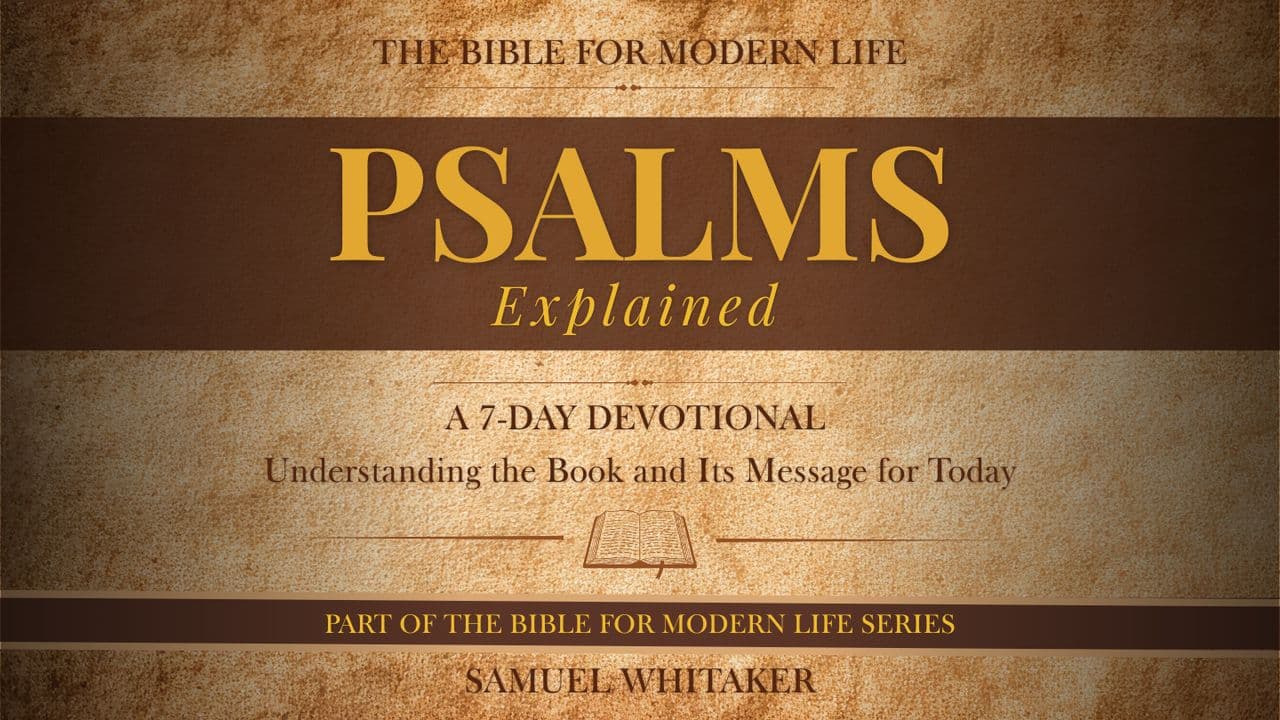
PSALMS EXPLAINEDSample
A Book Built for the Full Range
If you have only encountered the Psalms in fragments — a verse here, a familiar passage there — you may have formed the impression that the book is uniformly comforting. Psalm 23 is a shepherd. Psalm 46 is a fortress. Psalm 121 is a guardian who does not sleep.
But the Psalms also contain Psalm 22, which opens with the most desolate question imaginable: “My God, my God, why have you forsaken me?” They contain Psalm 88, which ends in darkness without resolution. They contain psalms of rage, of confusion, of deep disorientation. The book was not curated for comfort alone. It was shaped to hold the full range of what human beings actually experience.
This matters because it means no emotion you bring to the Psalms is too much for them. Anger does not disqualify you from the conversation. Doubt does not close the door. The writers of the Psalms were not presenting polished faith. They were demonstrating what it looks like to keep bringing everything to God — including the things that feel too raw or too ugly for religious language.
The structure of the book reflects this intentionally. It moves through five sections that carry the reader from instruction and lament in the early psalms all the way to a closing crescendo of praise in Psalm 150. But that praise is not easy. It comes after 149 preceding poems — many of them unresolved, many of them sitting in the dark. The final “Praise the Lord” is not naive. It is a declaration made by voices that have already said everything else.
The Psalms do not ask you to feel something you do not feel. They ask you to bring what is real and stay in the conversation. That is the invitation the full range of the book extends.
REFLECTION QUESTIONS
1. Have you ever felt that faith required you to suppress a difficult emotion or pretend a confidence you did not have? How does the emotional range of the Psalms speak to that?
2. What does it mean to you that the book of Psalms ends in praise after including so much lament, confusion, and unresolved tension along the way?
TODAY’S PRACTICE
Read Psalm 22:1–11 and then Psalm 150. Sit with the distance between those two passages. Both are in the same book. Both belong to faith. What does that breadth make possible for your own prayer life?
Scripture
About this Plan
The Psalms are the Bible’s most emotionally honest book — not a collection of feel-good verses, but a record of how real people brought everything they were carrying into an unfiltered conversation with God. Over seven days, this plan explores what it means to pray honestly, to worship through difficulty, to use memory as a weapon against despair, and to belong to a community that carries what you cannot carry alone. Whatever season you are in right now, the Psalms were written for it.
More
We would like to thank Samuel Whitaker for providing this plan. For more information, please visit: https://www.samuelwhitaker.net