Get the app
CommandSample

Cover One Another
“Say to Aaron and his sons: ‘These are the regulations for the sin offering: The sin offering is to be slaughtered before the LORD in the place the burnt offering is slaughtered; it is most holy.’” — Leviticus 6:25
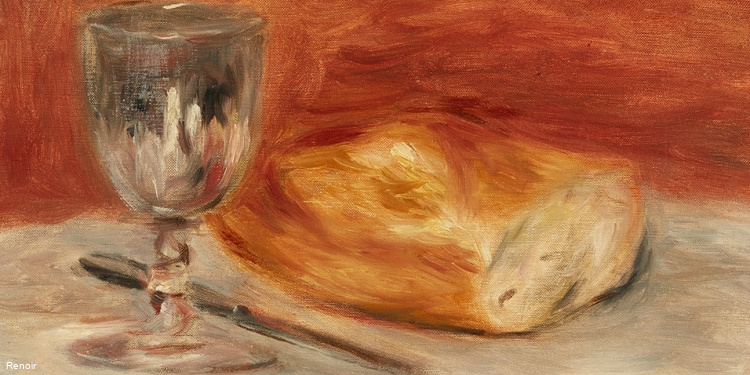
Every Friday night, my dining table is set in honor of the Sabbath. The table is covered in a white tablecloth, set with my best china, and adorned with flowers. There is wine, used for making the ritual blessing sanctifying the Sabbath, and two loaves of challah bread covered by a cloth. The reason we cover the challah may seem strange to you, but it’s so this special bread does not become “embarrassed.”
You see, in Judaism, there is a prescribed order when it comes to blessing our food, particularly on the Sabbath. Generally, we bless the bread before wine, but on the Sabbath, we must begin with sanctifying the day and bless the wine first. Since the challah may feel shamed by being set aside for the wine, we cover it so that it doesn’t “see” what is happening.
Now, of course, we know that bread does not have feelings. However, people do. The rabbis felt that developing sensitivity to people’s feelings was so important that they extended sensitivity to the challah. Think about it. A person who is sensitive to the feelings of bread will certainly be considerate to the feelings of others present at the Sabbath meal!
Being sensitive to the feelings of others is expressed in this Scripture, too. God commanded the sinner’s offering to be prepared in the same place as the burnt offering. This was intentional so that no one would know who had sinned and who was merely bringing a burnt offering. God went out of His way to make sure that no one would be embarrassed—and so should we.
Judaism maintains that embarrassing someone in public is akin to murder. Have you ever said, “I was so embarrassed I could have just died”? Most of us can identify with that feeling of being embarrassed, of losing our sense of self-worth, and how awful that feels in the moment. In some ways, it’s like a death to our reputation.
That’s why we must be extremely careful with the feelings of others. In fact, Scripture teaches us that we have to be cognizant of other people’s feelings all the time.
Just as we cover our challah bread, we must also shield our brothers and sisters from embarrassment and wrap them in beautiful words of encouragement, praise, and love!
Scripture
About this Plan
For millennia, God’s people have been carrying out a weekly Bible study plan. Every year, they read through the Torah from Genesis to Deuteronomy. In synagogue each week, they read and study a Bible passage—the weekly parshah. This week’s parshah is called “Tzav,” which is Hebrew for “Command,” and covers Leviticus 6:1–8:36.
More
We would like to thank International Fellowship of Christians and Jews for providing this plan. For more information, please visit: https://ifcj.org