

The Bible App is completely free, with no advertising and no in-app purchases. Get the app
Waymaker Church | The Names of God - Jehovah Raah

Sunday Morning Service 6.21.26
Sunday Service
Locations & Times
Waymaker Church
202 S Sunset Ave, Roswell, NM 88203, USA
Sunday 9:00 AM
Sunday 11:00 AM
Welcome to Waymaker Church! We are so excited to have you join us today! We exist to Encounter, Live for, and Advance the Kingdom of God!

This morning, we are jumping into the last message of our seven-part series “The Names of God.”
So far in the series, we have looked at the power of a name and also six redemptive names of God.
The baseline of this series was to understand the power of a name. That they convey more than a label or a title, but the essential qualities of the one who bears the name. The names of God signify honor, express His power and authority, and they reveal His covenant character and function.
In this series, we have studied:
• Jehovah Jireh “The Lord Who Sees/Provides”. He sees every need before it arises and responds according to His covenant character.
• Jehovah Rapha “The Lord Our Healer”. He brings healing to the total man, Spirit, Soul, and Body.
• Jehovah Tsidkenu “The Lord Our Righteousness”. He took our sin and gave us righteousness, our shame and gave us acceptance, our condemnation and gave us freedom, our death and gave us life, and our judgment and gave us grace. He has not asked us to perform, but to receive.
• Jehovah Nissi “The Lord our Banner”. Through His death, burial, and resurrection we have received victory. We replace effort with surrender. We don’t have to rely on personal hustle, grit, or self-reliance. Instead, we lift up the name of Jesus.
• Jehovah Shalom “The Lord our Peace”. The peace of God isn’t merely emotional comfort. It is restoration of your entire being, spiritually, relationally, and materially.
• Jehovah Shammah “The Lord is There”. The powerful reality of this name is that we have open-door access to divine presence. God’s presence is a promise, not an emotion.
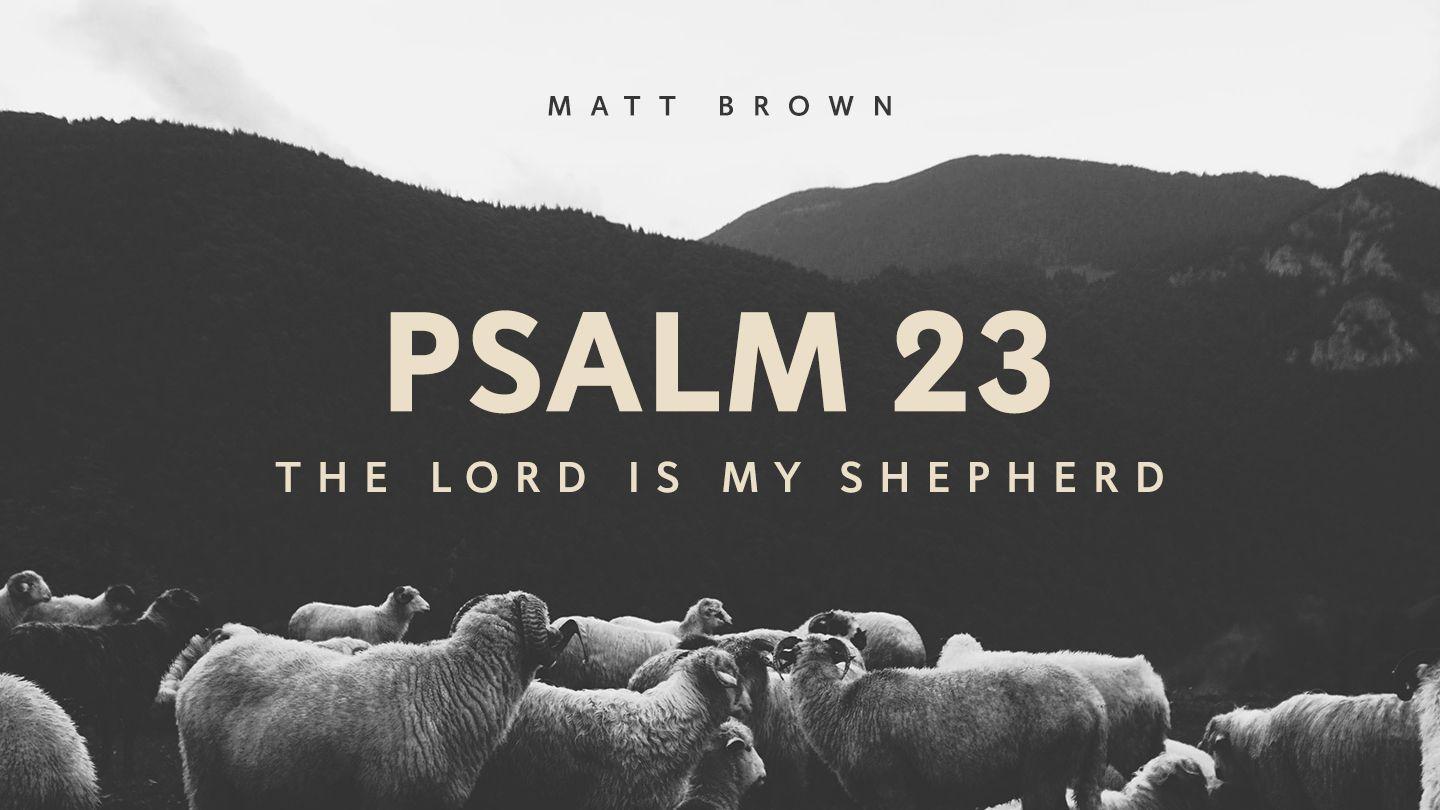
Today, we are wrapping up our series with the name Jehovah Raah, “The Lord is My Shepherd”.
I don’t know about you, but I have loved seeing the different dimensions of God's character in this series. He truly is the God who supplies every need, heals our lives in every way we need it, provides righteousness we don’t deserve, fights our battles, gives us peace, and the great gift of His presence.
So far in the series, we have looked at the power of a name and also six redemptive names of God.
The baseline of this series was to understand the power of a name. That they convey more than a label or a title, but the essential qualities of the one who bears the name. The names of God signify honor, express His power and authority, and they reveal His covenant character and function.
In this series, we have studied:
• Jehovah Jireh “The Lord Who Sees/Provides”. He sees every need before it arises and responds according to His covenant character.
• Jehovah Rapha “The Lord Our Healer”. He brings healing to the total man, Spirit, Soul, and Body.
• Jehovah Tsidkenu “The Lord Our Righteousness”. He took our sin and gave us righteousness, our shame and gave us acceptance, our condemnation and gave us freedom, our death and gave us life, and our judgment and gave us grace. He has not asked us to perform, but to receive.
• Jehovah Nissi “The Lord our Banner”. Through His death, burial, and resurrection we have received victory. We replace effort with surrender. We don’t have to rely on personal hustle, grit, or self-reliance. Instead, we lift up the name of Jesus.
• Jehovah Shalom “The Lord our Peace”. The peace of God isn’t merely emotional comfort. It is restoration of your entire being, spiritually, relationally, and materially.
• Jehovah Shammah “The Lord is There”. The powerful reality of this name is that we have open-door access to divine presence. God’s presence is a promise, not an emotion.
Today, we are wrapping up our series with the name Jehovah Raah, “The Lord is My Shepherd”.
I don’t know about you, but I have loved seeing the different dimensions of God's character in this series. He truly is the God who supplies every need, heals our lives in every way we need it, provides righteousness we don’t deserve, fights our battles, gives us peace, and the great gift of His presence.
When I think of this final name, Jehovah Raah, “The Lord My Shepherd”, I feel like it summarizes in a practical sense all of the other names. The picture of God as our shepherd is powerful when you understand historically both what the job actually required and the general nature of sheep.
Traditional shepherding was a grueling 24/7 lifestyle that demanded a rare combination of grit and gentleness.
Shepherds’ eyes and ears were always open. Constantly scanning the horizon for predators and danger. When dangerous moments arose, they would stand their ground, using a rod or sling to fight.
Shepherds possessed intimate knowledge of the sheep. They knew their sheep individually, their sound, limp, temperament, and weaknesses. They knew which ewe’s were about to give birth, which were easily spooked, or prone to wandering.
They were tough enough to handle the environment and survival yet remained tender enough to care for the newborn lambs in the flock. They were both patient and resourceful.
Now, in contrast, it is important to know that sheep are virtually defenseless against predators and remarkably oblivious to danger. To the point that they will, in fact, graze their way right off the edge of a cliff.
Sheep are also notoriously stubborn, prone to bad habits, and slow to learn. You cannot motivate a sheep through raw intimidation; if you terrify them, they will scatter and ruin the flock.
A shepherd must rely on relentless patience, using a steady voice and repetitive, gentle guidance to build trust over time.
Doesn’t this bring encouragement: That we are referred to as sheep? Obviously, I am joking, but I do think it is a fitting depiction of how we live our lives at times. I think Proverbs 14:12 nails the reality, “There is a way that seems right to a man, But its end is the way of death.”
This name of God reveals one of our deepest needs. That we need a shepherd who tends to and knows our lives.
Traditional shepherding was a grueling 24/7 lifestyle that demanded a rare combination of grit and gentleness.
Shepherds’ eyes and ears were always open. Constantly scanning the horizon for predators and danger. When dangerous moments arose, they would stand their ground, using a rod or sling to fight.
Shepherds possessed intimate knowledge of the sheep. They knew their sheep individually, their sound, limp, temperament, and weaknesses. They knew which ewe’s were about to give birth, which were easily spooked, or prone to wandering.
They were tough enough to handle the environment and survival yet remained tender enough to care for the newborn lambs in the flock. They were both patient and resourceful.
Now, in contrast, it is important to know that sheep are virtually defenseless against predators and remarkably oblivious to danger. To the point that they will, in fact, graze their way right off the edge of a cliff.
Sheep are also notoriously stubborn, prone to bad habits, and slow to learn. You cannot motivate a sheep through raw intimidation; if you terrify them, they will scatter and ruin the flock.
A shepherd must rely on relentless patience, using a steady voice and repetitive, gentle guidance to build trust over time.
Doesn’t this bring encouragement: That we are referred to as sheep? Obviously, I am joking, but I do think it is a fitting depiction of how we live our lives at times. I think Proverbs 14:12 nails the reality, “There is a way that seems right to a man, But its end is the way of death.”
This name of God reveals one of our deepest needs. That we need a shepherd who tends to and knows our lives.
The first thing I want you to see about this Psalm is the common theme that we also saw last week. The declaration is personal. Like Psalm 91, David declares The Lord is MY Shepherd.
David didn’t say he is a shepherd, He said He is MY Shepherd. The emphasis again is on personal intimacy.
The aim of every believer is to move from knowing about God to actually knowing Him. We don’t want our relationship with God to be just an acquaintance.
The name Jehovah Raah calls us to a God who knows His sheep personally, calls them by name, watches over them continually, and walks with them daily. He is not absent or distant. He is near.
Not only does He know us, but He knows what we need. The provision of God is total.
Psalm 23 reveals six provisions He leads us to.
• The first is green pastures (nourishment). Spiritually, these represent God’s word, spiritual growth, and daily sufficiency.
• Second is still waters (peace). Sheep will not drink from turbulent water. God provides rest, peace, and refreshment.
• Third is restoration (healing). He restores our soul. This speaks to emotional healing, spiritual renewal, and recovery from failure.
• Fourth is guidance (direction). He leads me in paths of righteousness. God provides wisdom, direction, and moral guidance.
• Fifth is protection (security). Your rod and Your staff comfort me. He defends us from danger.
• Sixth is presence (companionship). Thou art with me. The greatest blessing is not what God gives but that God himself is present.
When I look at this list of what He does as shepherd, it shows how important trust is. We can look at this list and agree with it, but do we trust Him enough to let Him lead us to these things that we need?
God deliberately compares us to sheep because we are not designed to live independently of Him. We were not created for self-sufficiency. We need to understand that dependence on God is not weakness; it’s wisdom.
Dependency matters because the shepherd leads before He feeds. Many believers want God’s blessings without following God’s leadership. Listen, obedience precedes blessing, following precedes provision, and trust precedes breakthrough.
I also want you to notice that the Psalm speaks of walking through the valley of the shadow of death. Good shepherds lead sheep through valleys. Why? Valleys are places of growth, testing, dependence, and spiritual maturity.
I have said it before, and I will say it again. We actually need the valleys. Not all of life is a mountain top experience. We celebrate the victories of the mountain top, but we get to know God intimately in the valleys, because it is not the absence of the storms that we need. It is to learn and know that the Shepherd is with us.
The tough times create opportunities for testimony. They refine us; they reveal deficiencies and areas of misplaced trust.
When we walk with God through the valleys, we gain personal knowledge of God’s protection in our lives. God uses His rod to protect us, to defend against the attacks of the enemy, and to correct us when we wander.
He uses His staff to guide, correct, and rescue. He keeps us on course. If there is one thing we need to understand about God’s correction, it is that it is not punishment, it’s protection. The root is love, care, and compassion.
David didn’t say he is a shepherd, He said He is MY Shepherd. The emphasis again is on personal intimacy.
The aim of every believer is to move from knowing about God to actually knowing Him. We don’t want our relationship with God to be just an acquaintance.
The name Jehovah Raah calls us to a God who knows His sheep personally, calls them by name, watches over them continually, and walks with them daily. He is not absent or distant. He is near.
Not only does He know us, but He knows what we need. The provision of God is total.
Psalm 23 reveals six provisions He leads us to.
• The first is green pastures (nourishment). Spiritually, these represent God’s word, spiritual growth, and daily sufficiency.
• Second is still waters (peace). Sheep will not drink from turbulent water. God provides rest, peace, and refreshment.
• Third is restoration (healing). He restores our soul. This speaks to emotional healing, spiritual renewal, and recovery from failure.
• Fourth is guidance (direction). He leads me in paths of righteousness. God provides wisdom, direction, and moral guidance.
• Fifth is protection (security). Your rod and Your staff comfort me. He defends us from danger.
• Sixth is presence (companionship). Thou art with me. The greatest blessing is not what God gives but that God himself is present.
When I look at this list of what He does as shepherd, it shows how important trust is. We can look at this list and agree with it, but do we trust Him enough to let Him lead us to these things that we need?
God deliberately compares us to sheep because we are not designed to live independently of Him. We were not created for self-sufficiency. We need to understand that dependence on God is not weakness; it’s wisdom.
Dependency matters because the shepherd leads before He feeds. Many believers want God’s blessings without following God’s leadership. Listen, obedience precedes blessing, following precedes provision, and trust precedes breakthrough.
I also want you to notice that the Psalm speaks of walking through the valley of the shadow of death. Good shepherds lead sheep through valleys. Why? Valleys are places of growth, testing, dependence, and spiritual maturity.
I have said it before, and I will say it again. We actually need the valleys. Not all of life is a mountain top experience. We celebrate the victories of the mountain top, but we get to know God intimately in the valleys, because it is not the absence of the storms that we need. It is to learn and know that the Shepherd is with us.
The tough times create opportunities for testimony. They refine us; they reveal deficiencies and areas of misplaced trust.
When we walk with God through the valleys, we gain personal knowledge of God’s protection in our lives. God uses His rod to protect us, to defend against the attacks of the enemy, and to correct us when we wander.
He uses His staff to guide, correct, and rescue. He keeps us on course. If there is one thing we need to understand about God’s correction, it is that it is not punishment, it’s protection. The root is love, care, and compassion.
Jehovah Raah reveals the heart of God. That He is Caring, Compassionate, Protective, Present, Faithful, and Attentive. His eyes as the shepherd are on us.
The practical application of Jehovah Raah “The Lord Our Shepherd”:
When you feel lost: The Shepherd guides.
When you feel anxious: The Shepherd gives peace.
When you feel wounded: The Shepherd restores.
When you face uncertainty: The Shepherd leads.
When you walk through grief: The Shepherd stays near.
When you face spiritual attack: The Shepherd protects.
When you feel alone: The Shepherd is present.
The practical application of Jehovah Raah “The Lord Our Shepherd”:
When you feel lost: The Shepherd guides.
When you feel anxious: The Shepherd gives peace.
When you feel wounded: The Shepherd restores.
When you face uncertainty: The Shepherd leads.
When you walk through grief: The Shepherd stays near.
When you face spiritual attack: The Shepherd protects.
When you feel alone: The Shepherd is present.
When the Lord is our Shepherd, we never face life alone. He provides what we need, guides us where we should go, protects us from danger, restores us when we fail, and remains with us through every season of life.
My prayer this morning is that you would learn to live each day with the confidence that the Shepherd knows you and faithfully cares for you.
My prayer this morning is that you would learn to live each day with the confidence that the Shepherd knows you and faithfully cares for you.

Take the Next Step in Your Journey
If you are new to Waymaker Church, make sure to fill out our Digital Next Step Card!
https://waymaker.churchcenter.com/people/forms/45548
Give Online
Thank you for Faithful Generosity to advance the Kingdom of God!
https://waymaker.churchcenter.com/giving