 Pran aplikasyon an
Reading the Bible in Historical Sequence Part 8Egzanp
God tells Ezekiel to act out the coming siege of Jerusalem with little food. He is to shave his head and divide his hair to represent two parts killed, one part taken into exile and a few subjected to other trials. The whole land will suffer great anguish and famine.
Note Ezekiel 4:1–6: Ezekiel warned His exiled people of the coming siege and destruction of Jerusalem. The 390 years of Israel’s iniquity is the period between Jeroboam’s first imitation feast (1 Kings 12:32) in the idol center of Bethel in December 975 BC, and July 588 BC when Jerusalem was destroyed (388 full years and two part years). The 40 years of Judah’s iniquity is probably a nominal period reflecting reigns of sin but mainly Manasseh’s extremely evil reign (2 Kings 21:11–16; 23:26–27; 24:3–4; Jeremiah 15:4) between 698 BC when he became king until about 677 BC when he was captured and taken to Babylon where he repented (2 Chronicles 33:11–12). On release he continued reigning until 643 BC. Manasseh is thought to have sawn Isaiah in half (Hebrews 11:37).
Konsènan Plan sa a
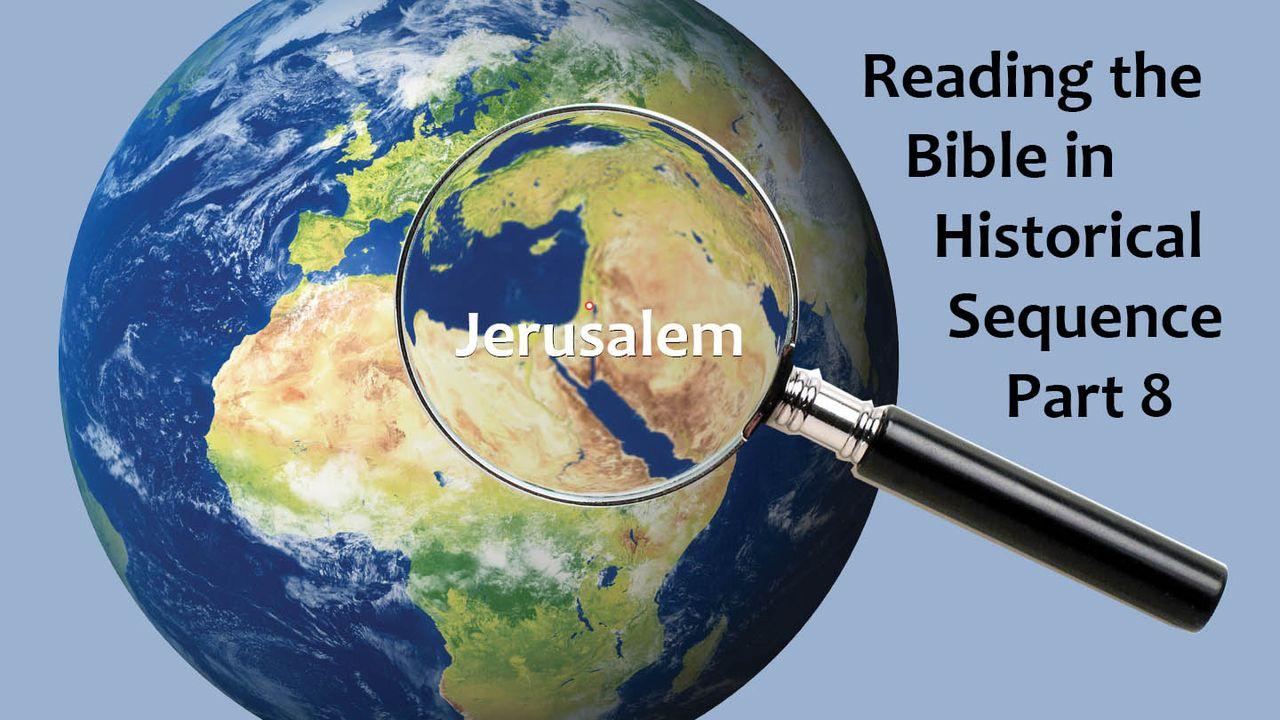
In the beginning was the Word … but what came next? This plan is for anyone who wants a better understanding of the Bible. It provides a chronological reading program that endeavors to place all biblical passages in their date order. Part Eight of this twelve-part one-year reading plan is titled ‘A Destroyer Carries Judah into Exile: 629 BC–587 BC’.
More
Plan ki liye yo

Karèm/Pak : Jezi fè fas ak lanmò avèk kouraj

Mirak Jezi : Revele idantite divin Li
Parabòl Jezi : Eksplikasyon pratik sou Peyi Wa a

Karèm/Pak : Dènye jou Jezi yo
Ansèyman Jezi : Desizyon saj & benediksyon ki dire

Grandi Nan Sanktifikasyon

Gerizon Jezi : Eksplore pouvwa & konpasyon

Karèm/Pak : Jezi soufri, mouri, epi genyen viktwa

Istwa Nwèl : 5 jou sou nesans Jezi
