Get the app
And He Shall Be Called: Advent Devotionals, Week 4Sample
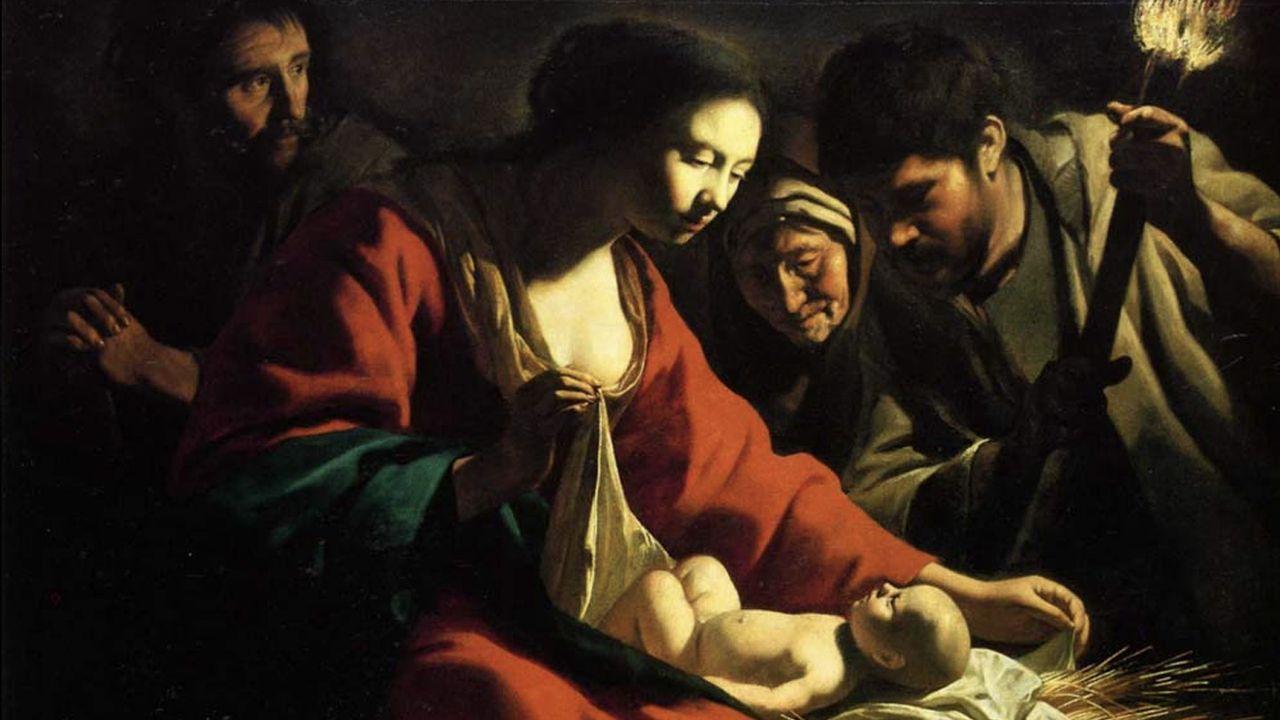
Advent Day 27: Love Incarnate | Love Divine
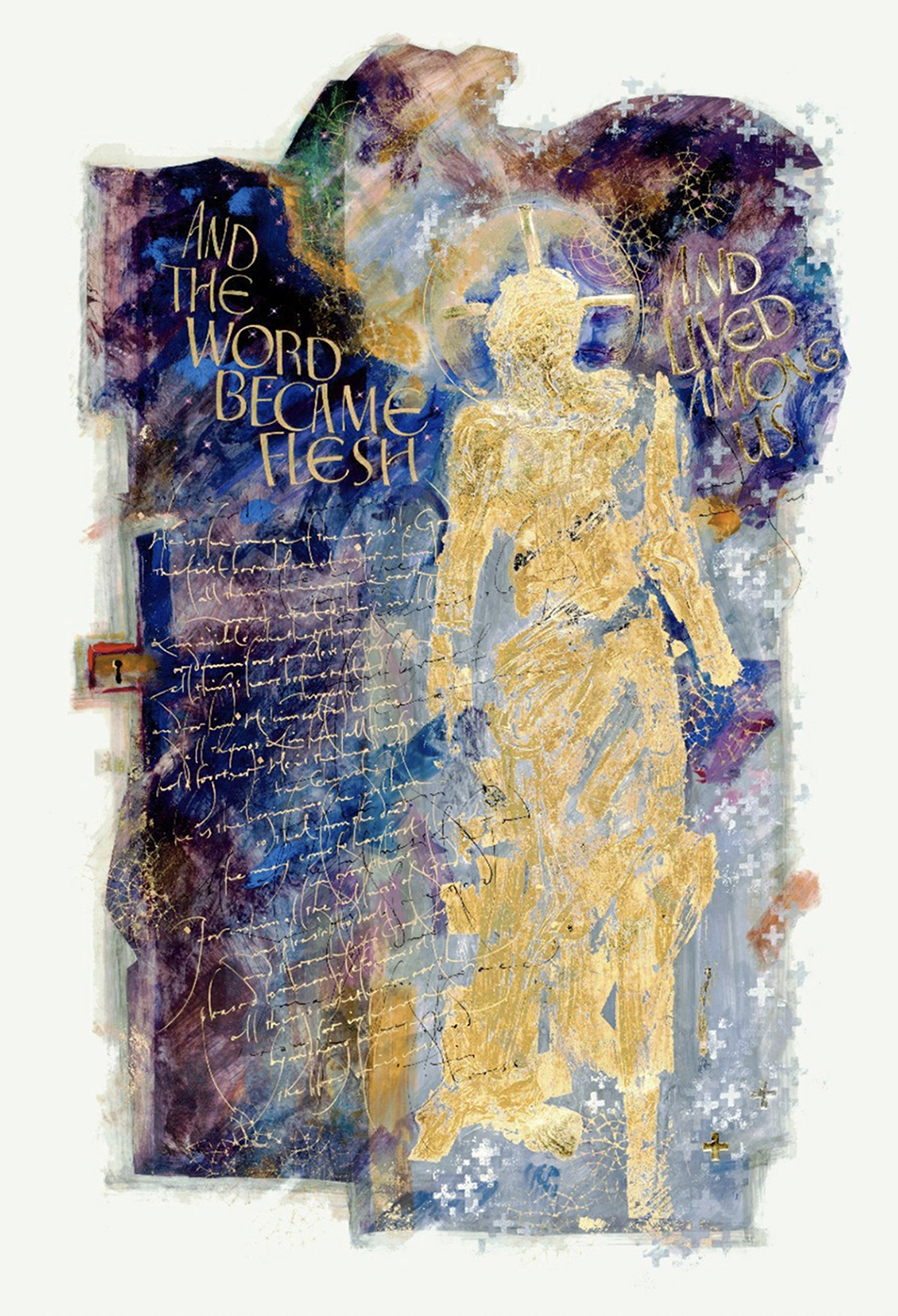
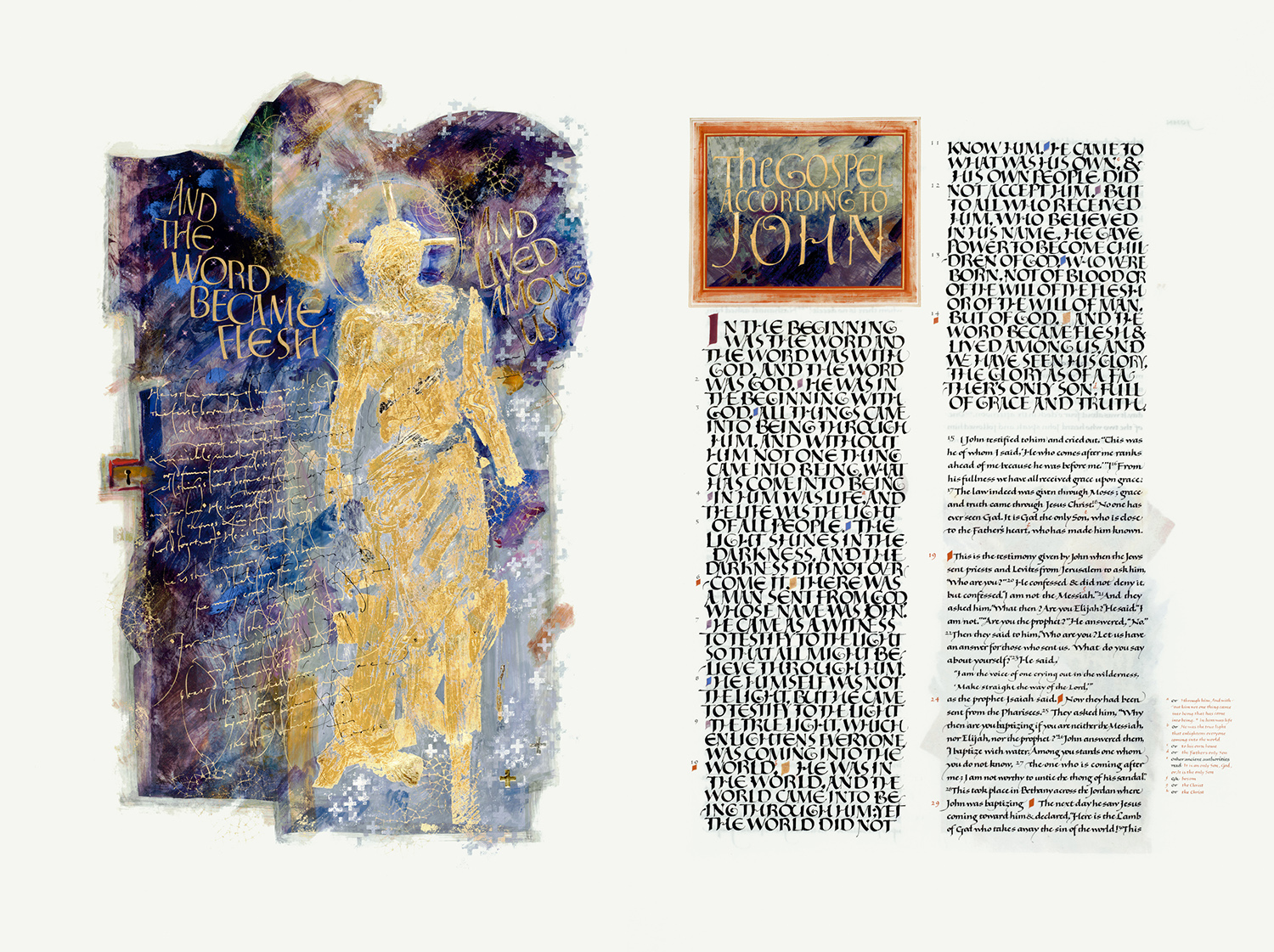
Word Made Flesh, John Frontispiece, Donald Jackson © 2002. The Saint John’s Bible, Saint John’s University, Collegeville, Minnesota, USA. Scripture quotations are from the New Revised Standard Version of the Bible, Catholic Edition, © 1993, 1989 National Council of the Churches of Christ in the United States of America.
Used with permission. All rights reserved.
“Noel” performed by Lauren Ashley Daigle, composed by Chris Tomlin.
“Joy to the World (Emmanuel)” performed by Deborah Ezzy-Walton and David Holmes, music arranged by Craig Gower, lyrics by Isaac Watts.
Poetry:
“Prefix: Finding the Measure”
by Robert Kelly
Finding the measure is finding the mantram,
is finding the moon, as index of measure,
is finding the moon's source;
if that source
is Sun, finding the measure is finding
the natural articulation of ideas.
The organism
of the macrocosm, the organism of language,
the organism of I combine in ceaseless naturing
to propagate a fourth,
the poem,
from their trinity.
Style is death. Finding the measure is finding
a freedom from that death, a way out, a movement
forward.
Finding the measure is finding the
specific music of the hour,
the synchronous
consequence of the motion of the whole world.
Love Incarnate, Love Divine
In all the writings we have from the Apostle John, love is a dominant theme. Love is mentioned 39 times in his Gospel, and 25 times in 1 John alone — far exceeding even 1 Corinthians 16 mentions, with its famous 1 Corinthians 13, “Love is…” passage, that we love to hear at weddings.
Admittedly, I’m tempted to think of John as the hippie disciple. Peter is headstrong, Levi knows how to throw a party, but John — the disciple Jesus loved (John 13:23) — is all peace and love, all the time. Right?
Well, the other Gospels tell a different story. In Mark 3, Jesus nicknames John and his brother James, “The Sons of Thunder” — hardly a name for the meek and mild. In Matthew 20, the brothers (prodded by their mother) clamor for the top cabinet positions in Jesus’s coming administration. In Luke 9, the pair, full of thunderous prophetic zeal, ask permission to call down fire on their perceived enemies, just like Elijah did.
In response, Jesus issues a rebuke (Luke 9:55).
I wonder if this is the moment John begins to turn from thunder to love. He is so sure Jesus is the Messiah, and so sure he knows what that means: political and supernatural power to rule from on high. But each time he tries to express this power, in righteous zeal and religious aspiration, Jesus comes with a different message: “Not so with you” (Matthew 20:26).
What does it take for this son of thunder to pen the words, “He who does not love does not know God, for God is love”? It is a prolonged encounter with Love Incarnate. John discovers that “God so loved the world” and that “God did not send His Son into the world to condemn the world, but that the world through Him might be saved.” He discovers that Jesus is “the love of God[,] manifested toward us.”
Joy to the world! Love is come.
All his boyhood training in the synagogue, all his absorption of the Pax Romana by osmosis, and the harsh reality of first-century living had taught him that the goal of life was to display power over others — be it neighbors or enemies. But John came to know “the Word became flesh” (John 1:14), and proximity to Divine Love in human form unmasks a truth stitched into the fabric of the universe, fully revealed in Christ: Love is of God and God is love.
Love is, as the poet says, “the synchronous consequence of the motion of the whole world.” To dance with the movement of love, is to step in time with the universe as God created it to be. And that dance transformed a son of thunder into a beloved disciple.
Love becomes John’s measure and mantram. The invitation of discipleship is to let it become ours, too. As we reflect on the Christmas dinner conversations of last week, the conference room meetings of next week, the neighborhood disputes, or the Sunday morning squabbles, how might love act differently than the power-over impulses that we’ve garnered by osmosis?
Prayer:
Word of God, Incarnate Love, thank you for revealing to us Abba’s love. Thank you for not condemning us, but for becoming the propitiation for our sins. Jesus Christ, Love Divine, help us to love one another as you have loved us. Because we do love you, but we know we can only say that because you loved us first.
In Jesus’s name,
Amen.
Chase Andre, M.A.
Instructor in Communication Core and Digital Learning
Department of Communication Studies
Biola University
For more information about the artwork, music, and poetry selected for this day, please visit our website via the link in our bio.
Scripture
About this Plan
Biola University's Center for Christianity, Culture & the Arts is pleased to share the annual Advent Project, a daily devotional series celebrating the beauty and meaning of the Advent season through art, music, poetry, prayer, Scripture, and written devotions. The project starts on the first day of Advent and continues through Epiphany. Our goal is to help individuals quiet their hearts and enter into a daily routine of worship and reflection during this meaningful but often hectic season. Our prayer is that the project will help ground you in the unsurpassable beauty, mystery, and miracle of the Word made flesh.
More
Related plans
Blessed Are the Spiraling: 7-Days to Finding True Significance When Life Sends You Spiraling

A Word From the Word - Knowing God, Part 2

10-Day Marriage Series

NT One Year Video - Q1

Standing Strong in the Anointing: Lessons From the Life of Samson

The Key of Gratitude: Accessing God's Presence

7 Ways to Grow Your Marriage: Wife Edition

A Spirit-Filled Life

Decide to Be Bold: A 10-Day Brave Coaches Journey