অ্যাপটি ডাউনলোড করুন
I Should Be Over This: When the Storm Passes but You're Still Spinningনমুনা

"I should be over this by now"—the lie whispers again. But should you? Today we’ll look at someone who refused to believe that lie. But first this.
As we learned yesterday, during the trial, we expend our energy bracing ourselves. But now, though it may seem to be over, it's not. We find ourselves in the next layer of it—but with less energy. Like when we complete a test only to find out it was part one of six. We aren't out of the woods yet. Life is still far from normal. We are fatigued and left wondering, "How much more can I take?"
Hope. It can become blurry, weak, and fainting. We may get depressed or apathetic. We may consider calling it quits just to get relief from the relentless struggle. We may be tempted to give up and jump ship.
Discouragement can set in during times like this, and it can be fierce. The world is going on as usual, but we aren't.
The first time I became aware of this was when I was eight years old. I remember watching other kids playing at recess, confused by why that would be a fun thing to do. I was a second grader, and my dad had recently died in a car accident. My classmates were going on as usual as my inner world was spinning faster than a tornado.
When there is such a gaping contrast between how everyday goes with what’s actually going on inside us, we can quickly conclude we can’t handle this anymore.
Noah could have given up and jumped ship, literally. He could have said, "Enough is enough. You didn't tell me about this part, God. I can't take it anymore. I survived the flood. I'm tired. I tried, but I'm done." Yet his soul was deeply connected to God, which bolstered his ability to stay the course and faithfully obey. (See Genesis 6:9.)
Job is another man who could have been tempted to give up and jump ship. Job was like Noah—blameless and upright, fearing God and turning away from evil. He lost just about everything but his heartbeat, his wife, and most importantly, his faith. (See Job 1:1-2:10.) Yet, Job had real anger, confusion, and doubt. He was disoriented.
Most of the entire book of Job are the anguishing conversations Job has with his friends and God (many of which attempt to answer the question of why God allowed these traumatic trials). He wrestles as his soul is deeply tormented. Yet within the pain, Job never shuts himself off to God.
Job’s honest faith under extreme duress eventually lands him back into a prosperous and blessed life as recorded in chapter 42. His humble, honest, vulnerable perseverance is remarkable.
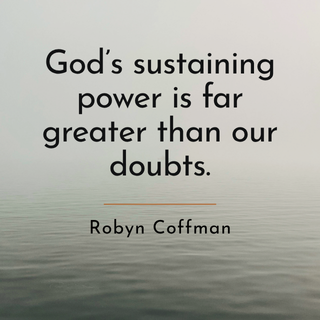
Through all the confusion, anger, and blurred hope, Job confesses that the mysteries of God are unsolvable. He repents from brutally questioning God and recasts his faith. He realizes God’s sustaining power is far greater than his doubts. What’s most remarkable, if you read the entire chapter, is that Job declares faith before his life is restored.
Job sets the example for us. However, please catch this. If Job—a man the Lord called blameless—struggled for a long time and questioned God deeply, why put expectations on yourself to be “over it already?” It’s natural to go through deep questioning while disoriented.
Here’s what’s important to remember. The trial is one thing. What follows is another. If we underestimate the impact of this normal experience of disorientation, it can become more traumatic than the initial trial. As uncomfortable as it is to be in this disoriented place, I assure you, it's normal…and it won’t last forever.
Prayer
Dear Jesus, it’s really hard not to give up. I’m so tired and weary. Give me faith like Job to stay open and close to you. Amen.
Remember, the temptation to give up is fierce, but so is God's sustaining power. Next, we’ll learn three critical components of soul care for when you feel disoriented.
ধর্মগ্রন্থ
About this Plan
“The worst is over. I should be over this. What's wrong with me?” Have you thought this? You're not alone. Even though the traumatic event has passed, it’s normal to feel disoriented, discouraged, and foggy. There is hope. Over the next five days, we'll explore what’s often ignored—what happens after surviving a hard storm—and discover practical ways to care for your soul as you find your footing and continue to heal.
More
সম্পর্কিত পরিকল্পনাসমূহ
Light Has Come

Making the Most of Your Marriage; a 7-Day Healing Journey

Advent

Refresh Your Soul - Whole Bible in 2 Years (1 of 8)

Refresh Your Soul - Whole Bible in 2 Years (2 of 8)
The Mission | the Unfolding Story of God's Redemptive Purpose (Family Devotional)
Finishing Strong

God vs Goliath: The Battle Before the Battle
The Mission: Every Nation Prayer & Fasting