ಆ್ಯಪ್ ನ್ನು ಪಡೆಯಿರಿ
Speakಮಾದರಿ

God’s Desire for Us
When a calf, a lamb, or a goat is born, it is to remain with its mother for seven days. From the eighth day on, it will be acceptable as a food offering presented to the LORD. — Leviticus 22:27
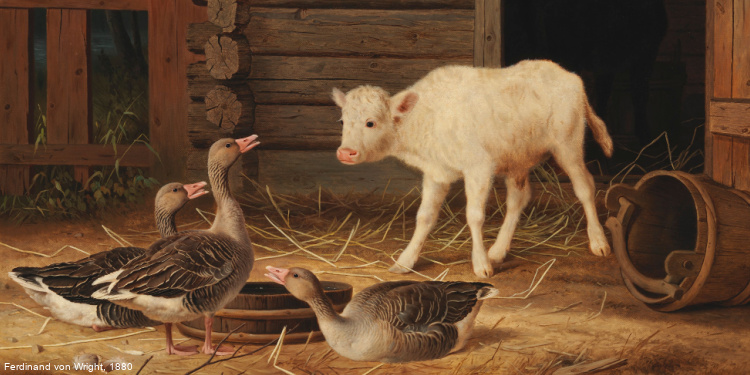
A few years ago, my husband and I took our children to visit a farm in Israel while it was calving season. We got the chance to witness the birth of a calf, but then something strange happened. The farmers immediately took the calf away and fed it with a bottle instead of allowing it to suckle from its mother.
The farmers explained to us that when a calf nurses from its mother, it forms a deep bond. If the two are separated before the calf is naturally weaned, the mother cow cries. They had tried it just once, and the mother cow moaned for days. The moaning was so loud and sad that it kept everyone up at night. From then on, the procedure became to take away the calves at birth, in order to spare the mother cow the pain of separation.
In this Bible verse, we read that a newly born calf was prohibited as a sacrifice until it had suckled from its mother for at least seven days. On the eighth day, the newborn was permitted as a sacrifice, and the mother cow would inevitably wail upon separation.
Was this a senseless and cruel practice?
According to Jewish teachings, the cries of the mother cow were intended as a message for God’s children. There is a saying that “the mother needs to give more than the calf wants to take.” The message for us is that as much as we want to receive from God, God’s desire to give to us is even greater. When the mother cow wails because she wants to give her offspring sustenance, it is an echo of God’s deep desire to provide for His children.
When we pray, and our prayers are not answered in the way that we like, we must understand that it’s not because God doesn’t love us; it’s because He loves us so much that He won’t give us something that is not good for us. God wants to give even more than our desire to receive. He will always give us exactly what we need for our very best.
ದೇವರ ವಾಕ್ಯ
ಈ ಯೋಜನೆಯ ಬಗ್ಗೆ
For millennia, God’s people have been carrying out a weekly Bible study plan. Every year, they read through the Torah from Genesis to Deuteronomy. In synagogue each week, they read and study a Bible passage—the weekly parshah. This parshah is called “Emor,” which is Hebrew for “Speak,” and covers Leviticus 21:1–24:23.
More